The Seven-Year Itch

Woman shroud hilltop

It’s been seven years.

A week of revolutions around the sun.

Happy (?) deathiversary to me.


I’ve made (some) progress.

My days no longer commence with torrential tears.

I seldom sense the vacant weight of my wedding ring.

Still, my singularity seems abnormal.

A bunker of pillows occupies the empty promise that is his side of the bed.

The duo I once was has been replaced by a shadowed silhouette and what is left of me.


I obstinately strive to satisfy my sons’ paternal vacuum. The maternal exercise in futility I refuse to cease — the truth I’m reluctant to verify.

Even in the slightest dilemma, I wonder: What words of advice would he impart? Would this be happening if he was here?

The absence of a father’s wisdom torments a mother’s heart.


My widow’s shroud swaddles and suffocates. It’s my daily personal paradox: Do I let it lull me into a muffled serenity or should I cast off sorrow’s cocoon?

Grief is the wolf that threatens my sheep’s clothing.

When my children were in elementary school, they each witnessed the metamorphosis of larva to butterfly. As it neared the time for the insects to emerge from their chrysalis, the students were warned not to “assist.” Aiding or abetting in the butterflies’ escape could result in malformations. There would be no choice but to let flightless creatures succumb to their deformities. Successful transformation required solitary struggles.

I continue to curb such a transfiguration. I’m seeking adaptation, not evolution. Disowning all traces of my former self would be tantamount to annulling my marriage. I need to move forward, not break away.


My mourning attire is beginning to itch. At times it is sweltering. But will shedding it completely leave me basking in a cool breeze or shivering from my cold reality? Is such a prophecy feasible?

Do I really want to know?

The future whispers from just beyond the horizon. Uncertainty muffles the echo, but I must submit to its summons. Inertia will only spawn decomposition.

That’s not what he desired for me.

That is not what I aspire for myself.

The Nurse With Kind Eyes

i-see-1315905

There are moments in your life that are seared in your recollection. Even though some of the finer details may fade with time, your heart is permanently branded with the memory. This is the story of one of those encounters.

In early 2003, my husband, Matt, underwent a stem cell transplant to eradicate the mutant white blood cells coursing through his veins. AKA – leukemia. For those who are blissfully unaware of the process, let me give provide you with a brief timeline:

  • What you don’t know will hurt you: The presentation of the 150+ page quick-reference guide describing the ins and outs of a transplant.
  • Getting to know you: Test after test after test to prepare the candidate for the procedure; including, but by no means limited to: multiple scans, blood work, full-body measurements, and psychological evaluations.
  • End of the world as you know it:  A combination of total body irradiation and chemotherapy to exterminate the diseased bone marrow. The patient’s native immune system is systematically obliterated.
  • Knowing what’s good for you: Harvesting and transplanting of the donor’s stem cells. In Matt’s case, his sister was the gracious benefactor.
  • Don’t know what hit you: While waiting for the donor cells to graft into the recipient’s immune system, the patient is extremely vulnerable to life-threatening infections. He or she is moved to an isolation room for protection. My story takes place during this precarious time.
  • Knowing whether to laugh or cry: Matt was given a 60 percent chance of not making it through the ordeal. It took eight weeks to see if he would overcome the odds.
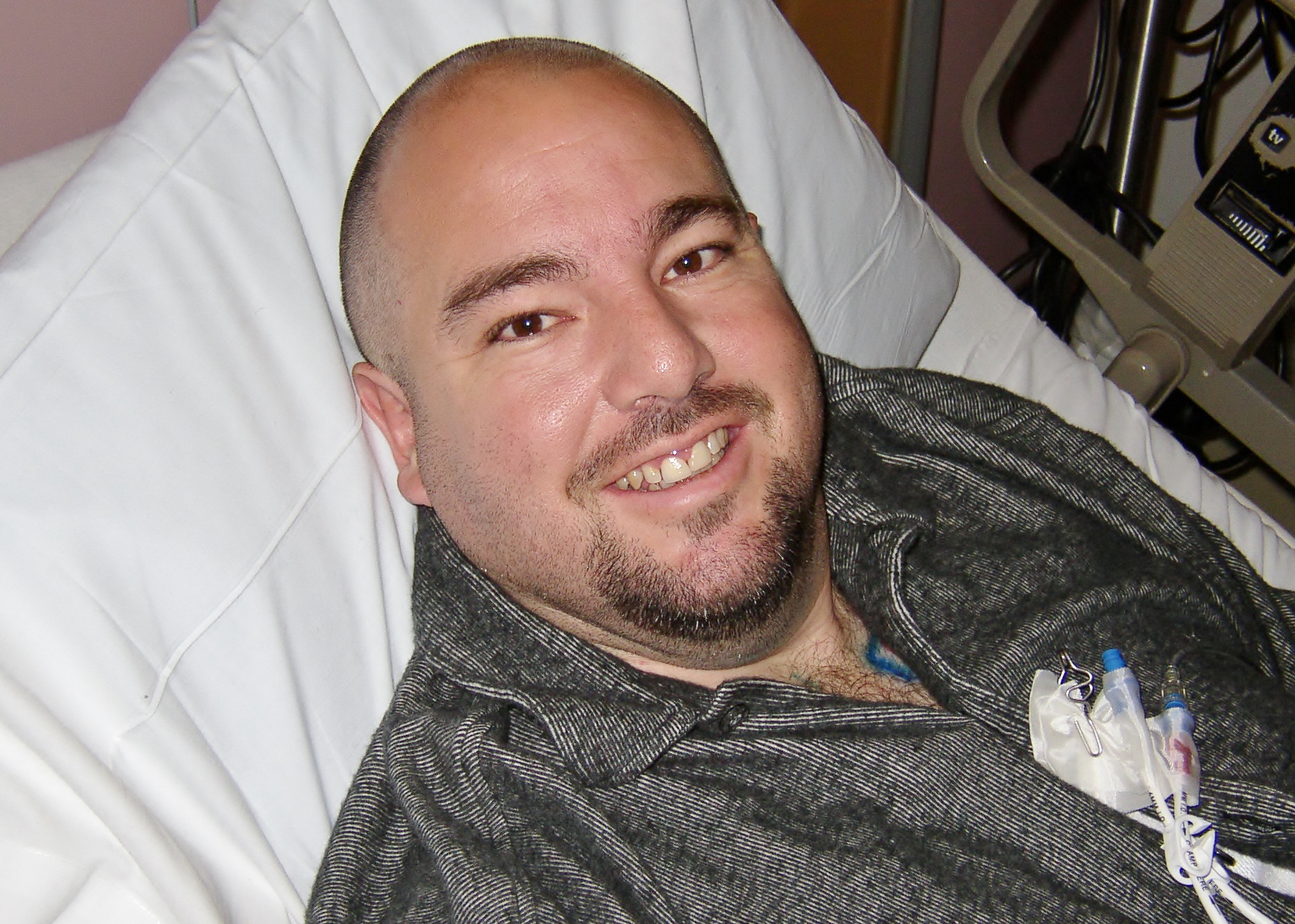
Matt - One of his first days in the hospital

Matt – One of his first days in the hospital

During Matt’s entire hospital stay, he was never left alone. I would arrive each morning by 6:30 to catch his doctor on his early rounds. One or both of his parents would come each evening to relieve me and spend the night. The nurses at his facility were some of the best in their field, but with an entire ward of critical patients, they were stretched thin. Our devoted trio strove to pick up some of the slack. There was always someone there to hold Matt’s hand, fetch the vomit bucket, or help him to the bathroom.

The days in isolation were some of the darkest. The patient feels like they are dying (quite frankly, they are) and, at their lowest point, begs you to let them. All traces of their original bone marrow – the production locale of blood cells – have been annihilated. This grueling prep must be completed in order for the donor stem cells to seize control.

It’s the medical equivalent of a hostile takeover.

Blood cell counts are done repeatedly to gauge progress. White blood cell (WBC) counts for healthy individuals typically run from 5,000-10,000. A stem cell transplant patient begins isolation with WBCs in the single digits. Waiting for the new cells to take root and multiply is like trying to make an industrial vat boil using only a birthday candle. Slow and tedious, you are constantly worried the candle might burn itself out before the water even reaches a simmer.

Previously, I would quickly grab a light lunch to eat back in Matt’s room. Outside food, however, was not allowed in the isolation wards. Stubbornly glued to Matt’s bedside during this perilous phase, I was skipping nearly every meal. When this absence of nourishment was combined with my lack of sleep and constant worry, I was in danger of needing my own hospital bed.

Whenever you spend any length of time in a medical facility, it doesn’t take long to know much of the nursing staff on a first-name basis. Most of them will take care of your loved one up to a week at a stretch. There are a few, however, that only appear for a day or two. These fleeting engagements can prevent you from ever learning the names of these particular providers of mercy. Such is the case of the nurse with kind eyes.

She came in one morning, introduced herself (again, can’t recall her name), and tended to Matt. She popped back in each hour just like every other nurse had been doing for the past week. After about hour five, she asked if I was going to lunch. “No,” I replied, “I’m afraid to leave.” The nurse look a little concerned, but nodded as she left. I had been asked that question many a time and thought nothing of it.

An hour or so later, she returned, a small paperback book in her hands. “Go eat. You need your strength,” she instructed. “I’m taking my lunch in here.”

“He won’t be alone.”

She was of Asian descent and her gaze was sympathetic. Beyond that, I am unable to recall her appearance. Nevertheless, I will never forget the effect she had upon me. My mind had been hissing with incessant anxiety. In the short amount of time it took to reach the cafeteria, I was able to settle my fears down to a steady purr. The kind-eyed nurse took on my “burden” for less than an hour, just long enough to rejuvenate my stamina for the weeks and months that lied ahead. Her act of compassion still resonates more than a decade later.


This essay is the second installment in my Bucket List of Gratitude. Check out my inaugural piece to learn more about my goal to recognize the not-so-random acts of kindness that have impacted my life.

My Bucket List of Gratitude

bucket-315982_1280

I’m creating my own kind of bucket list. Not the usual listing of things I wish to do before I leave this earth, but an accounting of the gracious drops of kindness that have filled my pail to the brim. Whether the contribution was a single drip from an eyedropper or gallons upon gallons of generosity, all have buoyed my soul, washed away hours of pain, and carried me through turbulent trials.

And so I have decided to make a conscious effort to recognize these not-so-random acts. Some were as temporary as the morning dew, but equaling as cooling. Others have been like IVs, injecting nourishment continually. A few were summer storms: electrifying, powerful, and brief. Whether their perpetrators knew it or not, each and every one made a significant impact. They quenched my drought in spirit and left me flooded with gratitude.


Item Number 1: Clean House – Warm Heart

My first story takes place when I was a young mother of two toddlers: Albert, age two-and-a-half and Nicholas, just past one. Our family of four was living in Washington State, about 1,000 miles away from most of our family in Southern California. In the 18 months since we had moved there, we had entered into a lovely circle of friends. We were in the early stages of a close, tight-knit relationship. Only time would tell if the stitches would unravel or interweave for a lifetime.

Albert had become very sick with what seemed to be the flu. We soon learned his rapid decline was due to Type 1 diabetes (T1D). He was initially admitted to the hospital for 10 days. Within 24 hours of returning home, he acquired the stomach flu again – a very dangerous situation for any T1D let alone a newly-diagnosed toddler. He returned to the hospital for nearly another week to get him stabilized.

During both hospital stays, my husband, Matt, and I took turns sleeping by Albert’s side. We would both spend our days there, alternating who would remain with him at night and who would go home to take care of Nicholas. Thankfully, one of our friends offered to watch Nicholas while we were at the hospital. Her youngest daughter was his same age and they were like two peas in a pod. While we were learning the perils of over or under dosing insulin, our younger son was enjoying an extended play date.

Needless to say, Matt and I were frazzled. Lack of sleep and worry were leaching away our composure. Fear shrieked through our minds as we relearned how to care for our first-born child. Not to mention we had a one-year-old confused by the prolonged absence of his parents. And the house – oh the house! It was one more thing not receiving a clean bill of health. Gazing at this noise and confusion was only ramping up my anxiety. I felt utterly inadequate and completely unable to do anything about it.

In between hospital visits, another member of our group dropped by to bring us dinner and see how we were doing. This particular friend was the meticulous one in our circle. You know the type – the person whose home is pristine – spic and span – downright gleaming. No dust bunny is ever allowed to propagate in her abode. You’d think the envy would evolve to hate, but it never does, because she is just that nice and charming.

When she arrived, I was perched among piles of laundry that hoarded every square inch of my sofa. Additional mounds of clothing engulfed my feet. Mortified, I shoved the heaps aside so she could sit alongside me. We chitchatted. She asked if there was anything else she could do. What little was left of my mental capabilities silently screamed: PLEASE – HELP ME CLEAN MY HOUSE!!! Still, I was appalled by the vision of her viewing the expanding black rings crowning my toilet bowls. “No, but thank you. We’re doing OK,” I lied.

She didn’t let on, but she didn’t believe a word I said.

The second hospital stay re-initiated the child care round robin. One morning, when Matt dropped off Nicholas, our babysitting friend asked him for a key to our house. “In case Nicholas needs some extra diapers,” she explained. Not realizing that I would be humiliated if anyone saw just how wretched a pigsty we were living in, he handed it over readily. The moment he left, our group commenced their latest escapade of kindness.

Up to this point in this particular trial, I hadn’t really cried. To me, it was a luxury I couldn’t afford. Honestly, I was afraid if I started I would lose any ability to function. So, I corked my tears and kept going.

It was my turn to stay home with Nicholas. The moment I unlocked the door, I knew something was amiss. Instead of the dirt and mildew aroma that usually wafted a greeting, I was welcomed by the delicate scent of pine sol. The disheveled cache of clothing was neatly sorted and folded. The soiled apparel that had overflowed every bedroom hamper was now Downy-fresh and stacked alongside. Everything sparkled – including the toilets! Right in the middle of my kitchen table was a vase filled with fresh-cut flowers. I took one look at that arrangement, collapsed to the floor, and sobbed.

That moment of release is forever tattooed in my memory. It is the point in time I cling to when I am overwhelmed; when I suppose I am alone. Without waiting for me to ask, my friends sensed what I needed and went into action. They saw through my desperate bravado. They cut through the grime and the grit of the situation. By cleaning my house, they wiped away part of the chaos and polished my sanity. I am forever and for all eternity, grateful.

A Mother’s Tale: Shielding and Letting Go

17337602656_aa396066df_k

Photo Credit: Flckr Commons

Once again, it was thrust upon us.

My sons and I were watching television and soon realized “IT” was going to be part of the storyline. Our lighthearted summer romp through The Hamptons was referencing a significant anniversary in the life of its main characters, a pair of brothers. Being the shrewd (and somewhat rabid) TV viewer that I am, I was able to quickly deduce the meaning of the upcoming fictional date.

Intuitively, I scrutinized my boys’ expressions to see if they had caught on. One of them readjusted his relaxed posture to more formal pose; the other shifted a bit in his chair. What used to take effort had now become instinctual. A narrative meant to tug at the heartstrings of most viewers was going to twist and turn ours. All three of us braced ourselves accordingly.

It had been 25 years since the death of their (the main characters’) mother.

“Shit!” I thought for seemingly the thousandth time. For a few years after we lost my husband, I would sidetrack my boys’ attention away from the television when such a plot development occurred. Sometimes, I would “accidentally” change the channel. “Oops!” I’d exclaim in my best, pseudo-innocent voice. Such tactics can only work for so long.


Wonder Woman Bracelets

Source: Giphy

The difficulties escalate this time of year.  My maternal eye views every Father’s Day themed commercial as a dart aimed squarely at my children. I would like to stand in front of them like Wonder Woman, deftly deflecting the onslaught of paternal imagery with a PING! and a POW! of my magic bracelets.  I’d encase both of them entirely in chainmail, if possible, to repel the wily projectiles that made it past me.

Regrettably, I haven’t always made the best decisions when it came to exposing my sons to unsuitable material. Case in point: I took both my sons to see the movie, ‘The Express’ mere months after losing their father. It was a film about Ernie Davis, the first African-American to win the Heisman Trophy. We were a football-obsessed family, so this should have been an enjoyable, but relatively uneventful weekend outing. What I carelessly overlooked is that Davis dies shortly after being drafted by the NFL. Of leukemia!!! Not my wisest parental decision.


I know it’s completely unrealistic, but I have often fantasized about a process where a cable customer could create a personalized warning system. A subscriber would enter whatever topics offended their sensibilities or damaged their emotional well-being. Shows would be subsequently scanned and customized alerts would appear when necessary. In the case of our household, they would read:

Caution, the following content contains scenes either depicting or referencing the death of one or more parent.

VIEWER DISCRETION IS ADVISED


n59bv

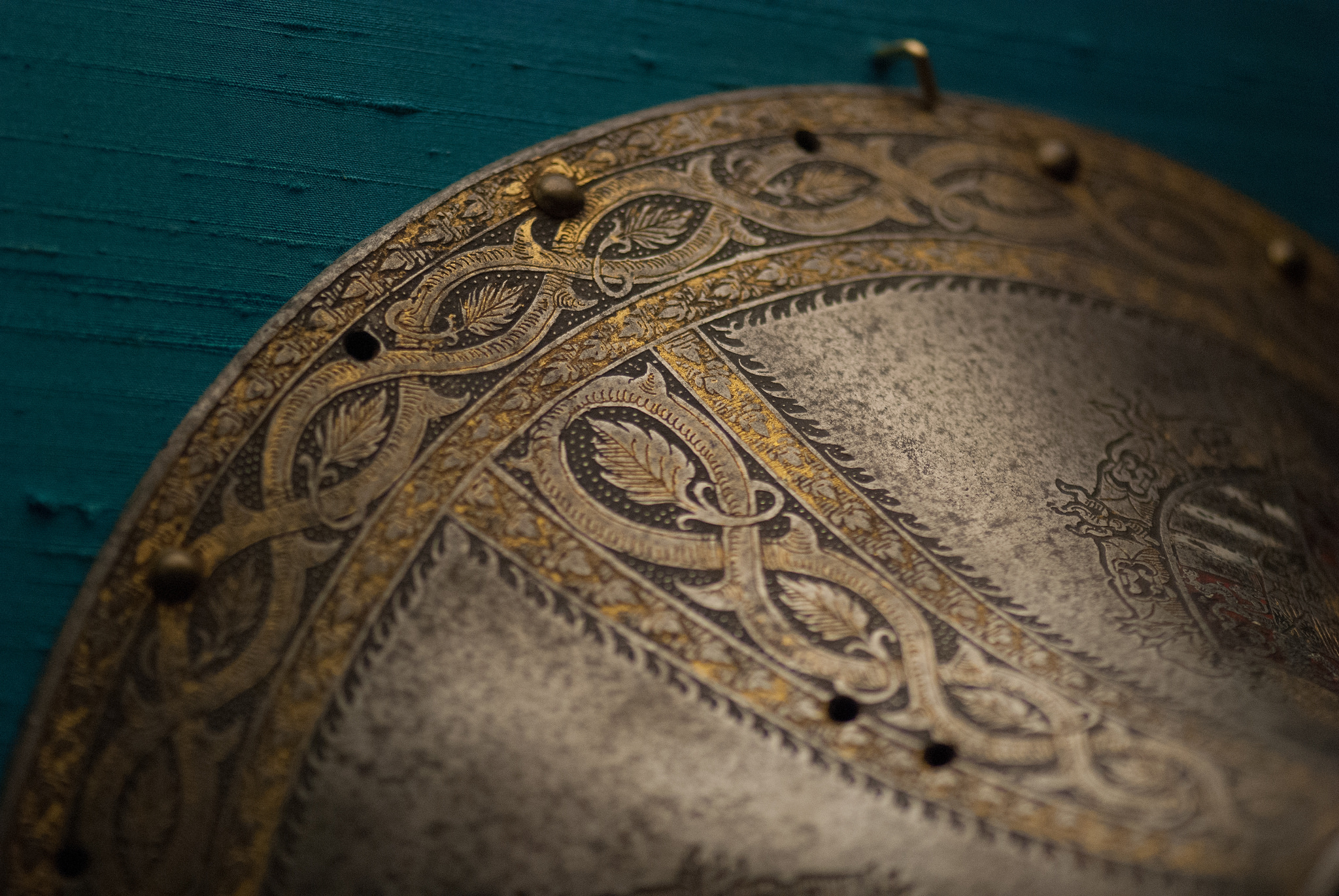
In the movie, ‘A Knight’s Tale,’ it is a woman who constructs the breastplate that best guards the heart of Sir Ulrich. It is lightweight, flexible, but durable. He is able to joust without unnecessary constraints. I used to be my sons’ blacksmith. The sole designer of their shields. But they are now young men. They must forge their own suitable armour.

In the end, the hero of the movie winds up being overburdened by his defense mechanisms. His metallic safeguards, no matter how accommodating they once were, become too rigid for him to continue. The newly christened knight discards his gauntlet and faces his final opponent unmasked, unshielded, and exposed.  Ultimately, he is victorious over the enemy that challenges his rightful place in society.

Whatever fortifications my sons select – whether they are walls, moats, or armour – it needs to be an individual choice. It is up to them to determine if they want to erect barricades. They alone elect whether to build them up or tear them down and when. As much as I may desire to, I can’t protect them anymore.

And so, tonight we will turn the TV on again. Will our viewing choices be friendly to our little family? Maybe. Maybe not. A strong fatherly lead could induce a wave of melancholy in my sons. A commercial featuring an affectionate husband might strike a chord with me. It’s impossible to predict. Unless we choose to live a life of solitary confinement, complete avoidance is impractical and not at all feasible. We will each weigh our options. We will measure our selections against our defenses. Hopefully, at least for now, we won’t be found wanting.

Dazed and Confused: Enduring an Emotional Concussion

Grief by Sarah Gath

A little while back I was having a heart-to-heart with a close friend.  Within a period of six months, he had lost both his stepfather and his mother. Dealing with his grief was becoming increasingly difficult. “It’s like I’m in a constant haze,” he explained. “I can’t seem to comprehend or complete the most basic of tasks.” “Makes perfect sense to me,” I replied. “You’ve been emotionally concussed.”

As a dedicated football mom, I am quite familiar with the physical ramifications of a brain bouncing inside a skull like a pinball. For four years, I ran the high school sidelines. I knew the signs of a concussion and subsequent protocol. It was my task to make the calls to 911 and/or an unsuspecting parents more times than I would have preferred. There were the instances when the brightest kids on the team had no idea what day it was. Sometimes, the athlete would drift in and out of consciousness, complaining of an intense headache when he was briefly coherent. Then there was the kid who acting as if he was happy drunk. We needed to assign him a babysitter to keep him from frolicking back onto the field.

When my own son had his first concussion, I witnessed the day-in and day-outs of such an injury. A designated “math kid,” he couldn’t add 2+2 for nearly three weeks.

The NFL, FIFA, International Olympic Committee, and other sports organizations look for numerous symptoms when assessing a possible concussion. Besides a persistent headache, these include:

  • Feeling slowed down
  • Nausea / vomiting
  • Sleep difficulties
  • Confusion
  • Fatigue / low energy
  • Sadness
  • Nervous or anxious
  • Feeling “in a fog”
  • Feeling more emotional
  • Difficulty remembering and/or concentrating
  • Irritability

Due to the recent outcries (and lawsuits) over the long-term damage of repeated concussions, both the NCAA and NFL have revised their guidelines regarding possible brain injuries suffered either during practice or competition. With the general medical consensus being that the more severe damage occurs when an athlete returns to play too soon (before the brain has had adequate time to heal) many injured professional and collegiate athletes are now mandated to refrain from competition until he or she has demonstrated satisfactory cognitive function. A secondary concussion suffered by an athlete who resumed competition too early can result in catastrophic brain injury.

Putting aside the debate on whether or not the sports community is doing too little too late to prevent brain injuries – what are the correlations between concussions and emotional trauma? Or overwhelming grief? In my own personal experience, and in the lives of those whom I’ve consulted on the matter – plenty.

Photo by Kevin Dooley-Originally in Color

Photo by Kevin Dooley-Originally in Color

Some say I’ve had more to “deal with” in my life that most. I might take issue with that conclusion, but I can’t dispute the facts: My son was diagnosed with type-1 diabetes at age 2 and a half. He was in and out of the hospital for nearly a month. My father-in-law was stricken by colon cancer and was forced to go on dialysis due to a tainted batch of chemotherapy. My husband donated one of his kidneys to save his father’s life. Some years later, my husband was diagnosed with leukemia, underwent a stem cell transplant, almost lost his eyesight, and eventually went into cardiac arrest and died a few years later. Personally, I have been affected by debilitating endometriosis, infertility issues, rheumatoid arthritis, and breast cancer to name a few. I guess my plate has been full for quite a while.

In many of these instances and others, my emotional circuitry was fried. Most of the time, when I needed to function despite of my circumstances; any and all sentiment was suppressed. I went numb. Other times, I sparked like an overloaded transformer, singeing those closest to me with blistering words and scalding outbursts. With my sideline sports history, you think I would have recognized the signs of something a little more serious than “feeling down” or being “overly sensitive.”

It’s been said that emotional trauma is stress run amuck. According to the American Psychological Association and the National Center for P.T.S.D., the symptoms of emotional trauma include:

  • Detachment
  • Sleep difficulties
  • Fatigue / low energy
  • Extreme sadness
  • Anxiety
  • Feeling “in a fog”
  • Feeling out of control
  • Having trouble concentrating or making decisions
  • Loss of intimacy
  • Eating disturbances
  • Memory lapses
  • Irritability
  • Feeling distracted

When you compare the symptoms of emotional trauma to those of a brain injury, they are almost identical.
Hence – emotionally concussed.

While scientists continue to debate the sequence of physiological events that produce emotion, the central nervous system is still considered to be the mastermind behind whatever we are feeling on any given day. When your CPU (your brain) has been strained to the upper reaches of its capacity, there are bound to be ramifications; much like the recently-documented cases of broken-heart syndrome, where excess amounts of stress hormones damage the heart. If the traumatic events happen in succession, the damage can be devastating.

Severe emotional distress can make you feel like you’ve been hit upside the head with a 2×4. Stunned and dazed for a moment, it might take you a moment to regain your bearings. If you are stuck repeatedly, or if the blow hits you just right, that “moment” can take days, months, or years.

Cool Texture by Ryan Houston

Cool Texture by Ryan Houston

Sports enthusiasts and ER personnel are frequent users of instant ice packs. These portable plastic packets are filled with a powdered chemical. Inside that is another pouch filled with a liquid chemical or water. When you squeeze and/or shake the packet, the inside pouch pops and the two chemicals react. As you are holding it, you can feel the reaction progress through the packet as it slowly turns completely cold.

Your brain can act the same way under extreme stress. Too much and Kapow!, your inner composure is burst, oozing into your surrounding grey matter. Soon, your synapses are cooled and your temperament is frozen into a mechanical and barely functioning tranquility. Your cognizance is in “Safe” mode.

As with an athlete, those who grieve run the risk of returning to life’s playing field too soon. Jobs, family, and friends may expect you to bounce back faster than you are ready. You, yourself, might be overly ambitious and presume you are prepared to get back in the game when you are far from it. Resuming strenuous, or even normal, activity before you are recuperated can be highly detrimental.

There is no pharmaceutical quick fix for a concussion — or grief. In reality, giving a brain injury patient certain analgesics can cause more harm than good. Aspirin or ibuprofen can thin the blood and exacerbate a brain bleed.  The best prescription is physical rest, mental relaxation, and time. Unfortunately, in the era of instant gratification, we are loathe to allot ourselves suitable amounts of any of them.

When my husband passed away, I was offered numerous agents to help me “cope:” one pill to help me sleep, another to boost my spirits, still another to help me get through the day. I declined them all.  I was wary of becoming dependent on any type of mood enhancer. More importantly, I didn’t want any agent to either dilute or dull the experienced trauma. To me, doing so would only delay the inevitable. I needed to experience the rawness – the full brunt of anguish – in order to get through it.

This is not to say that I always followed my own “sage advice”—far from it. I suppressed a lot of the grieving process, telling myself there were things that needed to get done, kids to take care of, other family and friends who needed to witness my composure so they could get on with their own lives. In my warped opinion, time was too precious and not worth the expense.

It's time to relax and unwind: Vinoth Chandar

It’s time to relax and unwind: Vinoth Chandar

Recently, I have had to go on short-term disability due to a persistent illness. I have to wonder: Is my body finally saying enough is enough and forcing me to slow down? Have I ever taken the time or done the work to truly rehabilitate? In the past few months, I have been able to experience quiet and search my soul, expand my creative writing, and enjoy more time with immediate and extended family.

If I had continued to be deemed physically fit, would I ever be emotionally well?

I am unsure if Emotional Concussion is listed in the American Psychiatric Association’s Manual of Mental Disorders. I doubt if I am the first one to coin the term.  I only know it accurately encompasses the symptoms of grief my friends and I have confronted. It helps to realize that we are not alone in this condition. We are not suffering from a rare, orphan disease.

We are not losing our minds.

With over 2.5 million deaths occurring each year in the U.S. alone; there are tens of millions of left-behind loved ones who currently and will continue to grieve for years to come. Acknowledging that we have been battered and bruised – that we need a breather – is the first step. It is crucial to heal our minds and our hearts, create our new normal – restore our sense of self.

Rest is not a dirty word.

Epilogue to: What About Meredith?

Once upon a time, she was me…

ICYMI: Here is the link to my previous post.

Well the two-part season finale has come and gone. IMHO, Grey’s conclusion was honest, and perceptive throughout both episodes. Not only regarding Meredith, but those surrounding her, including friends; his sister, Amelia; and even April Kepner. In fact, the episodes could have accurately been entitled “Portraits of Grief.” How one handles the loss of a loved one is not an A-to-B-to-C progression. It is multifaceted. It has twists, turns, and double backs. It rarely stays the same.

Of course, we were riveted by the young couple and their unborn child involved in a horrific accident: Can they be rescued? Who will be the hero? Will they survive? Romance in all its complexities was portrayed by the Richard-Catherine story line: How do two, strong-willed individuals compromise enough to commit to one another? But the underlying current was grief — in all its guts and glory.

We soon learn the Meredith packed up the kids and slipped away in the middle of the night. Gone for a year, we are shown snippets of how her friends deal with her absence. At first they are worried, then frantic. A little pissed off; most of them resign themselves to Meredith being Meredith. What she, the new widow, failed to understand is a concept that took me a while to realize: you are not alone in your loss and are now a role model for how to grieve. Your closest companions, family, in-laws, and colleagues have lost someone as well and are unsure of how to handle it. They need to see that you are OK, that you are coping, moving on — surviving — before they can as well. In a twisted way, their lack of composure is comforting; at least it was for me.

It demonstrated that my husband’s life resonated with others, that he mattered, that he wouldn’t be forgotten.

This is not to say I don’t admire Meredith for her selfishness. I am actually jealous. Her kids aren’t of school age. She had the financial resources to disappear. It was a luxury that few widows have, but secretly crave. All in all, it was a perfect metaphor for the sense of suspended animation you are in for a least a year. The world continues to rotate; life goes on, no matter how enveloped in grief you are. She was able to get off the infamous carousel for a while and just breathe.

Amelia’s grief demonstrated how loss is dealt with when it is initially denied. As the damaged sister, she had her walls in place. She’s been through this before. (father, lover, baby) She didn’t need any help. She was just fine, thank you. Only when she teetered on the edge of losing sobriety, did she finally cry out for support. As I hoped Grey’s would do, she angrily confronts Meredith about not having the chance to say goodbye to her brother. My husband had three sisters, just like Derek Shepherd. Only one was able to speak her farewell to him at the hospital. This was a moment in time that was of utmost importance to her and would have devastated her if it was prevented.

Meredith’s reaction was equally revealing. She breaks down in tears after Amelia leaves. Why such a response? Did she feel guilty? Unjustly accused? Probably a little bit of both. But in that scene, the audience is shown a key component of grief. 365 days— whether they are in reality or the television universe — are but a moment in the life of a widow. Emotions can well up and over at any time. They may or may not make “sense.” Every so often, they are uncontrollable.

Even April and Jackson were caught up in the cavalcade of grief. After losing their child, April runs off to a combat zone to channel her anguish, leaving Jackson behind to grieve alone. She comes back recharged, but different. “I like the new April,” Bailey tells a skeptical Catherine. Jackson later tells April that while he is happy for her new sense of purpose, he did and continues to feel abandoned in their supposedly shared heartache. Dealing with the loss of a loved one, especially a child, is partially a cooperative experience. When someone in the grief collective opts out and decides to go it alone, the rest are left feeling forsaken. The processing of their sorrow may be incomplete. Will their marriage survive this trial? We are left to ponder for the duration of the summer.

These story lines aptly portrayed the ripple effect of death. Losing someone close to you, whether it be a treasured friend or cherished loved one, affects everyone differently — but continually. Grief is both private and public, intimate and communal. It is ugly in its brutality and beautiful in its poignancy. Bravo Grey’s Anatomy. Thank you for getting it right.

Grief Lessons You Are Never Taught: The Prelude & Aftermath of Special Occasions

Lee Hayword

Few things in life are more personal than grief. The only one-size-fits-all premise is that everyone encounters, digests, and processes it uniquely. Since the progression of that process is in a perpetual flux, I find myself commonly exhibiting three different modes of grief. (Although I am sure there are others lurking.) The personalities in the trio take their turns coming and going, sometimes intertwining with one another and at other intervals completely overshadowing a counterpart. They are predictable in their unpredictability. My current triad includes:

  • The Neon Sign: This is time I want everyone to take notice of my widowhood. I yearn to have my grief heralded by the town crier with exclamations of “Sympathy for the suffering!” and “Alms for the widow!”
  • The Grace Kelly: Like a favorite pair of classically-styled earrings, my grief during these moments is subtle and demure, never ostentatious. It’s the pièce de résistance that you can’t quite put your finger on, but you know it’s there.
  • The Influenza: This is the ailment you try to ignore – attempt to maintain the stiff upper lip. The problem is, the more you try to stifle this type of grief, the harder it is to breathe and the increasingly nauseous you become.

All these types are prowling about, waiting to crash the party, when you are about to confront a significant occasion. Birthdays, holidays, and anniversaries will forever be altered once you have lost the person you primarily celebrated them with. My struggle dealing with the date of my 25th wedding anniversary was recently discussed in a post on Medium and subsequently featured in the Huffington Post.

What I didn’t disclose, and what nobody prepares you for, is the before and after of such monumental events. The prelude and the aftermath are the most grueling of days – and the ones when you feel the most isolated.  

The days, often weeks, before are a gradual crescendo. You become increasingly anxious, making sleep problematic. You’re apprehensive about facing the day. You fret about whether or not you should even get dressed or answer the phone. If it’s an event that you have to attend – want to attend – such as a child’s graduation, you are fearful that you might collapse into a puddle of tears at an inopportune moment.

When the date arrives, it is rarely as troubling or as uplifting as forecasted. You feel guilty and grateful simultaneously. The sorrow is a deep, throbbing ache. The loss is palatable. Yet, the compassionate comments of friends and family are consoling. The cards, flowers, and other reminders of their affection boost your disposition and fortify your resolve to make it through the day. Soon, you experience a delirium of grief that is both euphoric and melancholy.

But, the day after can be the cruelest for the uninitiated. Calls, emails, or presents don’t materialize to celebrate, soothe, or mourn this day. Beguiled with sentiment just 24 hours earlier, you feel forgotten – bereft of comfort and understanding. Like a burn victim, you need to debride the dead tissue: expose the uncontaminated and living flesh existing underneath the defunct scabs of yesterday. Most of the time, this is a solitary and nerve-wracking assignment. No one else recognizes the necessity.

For those who are grieving, give yourself the time you need to contend with a celebratory challenge. Allot at least 72 hours to endure and not be your customary, post-loss self. If you need more – take it! Don’t berate yourself if you can’t “get over it” in an arbitrary “timely” manner. Sorrow’s schedule is subjective. To the friends and family members of such individuals, please be wary; be conscious of your loved one’s struggles.  Grief never leaves. It is never concluded. It simply evolves.

Photo credit: Alone by Lee Hayword

What About Meredith?

Once upon a time, she was me…

ellen-pompeo-meredith-grey

I’m not even going to bother with the spoiler alert. If you are interested in reading this, you know what happened. McDreamy was killed through a series of unfortunate events. 1. Foolishly stopped his car in the middle of road. 2. T-boned by a semi. 3. Transported to a level 2 hospital. 4. Suffered the ramifications of either the chauvinistic medical system or an egomaniac on-duty attending, depending on your viewpoint.

Many posts have been written about the way Derek’s departure was handled. Was the episode a 41-minute middle finger gesture by Shondra Rhimes to Patrick Dempsey? Was it a commentary on the unavailability of top-tier medical facilities? Or was it an accurate depiction that people can be careless, needless mistakes can happen, and people die for stupid reasons? I’ll leave that debate up to other blogs, the Twittersphere, and Change.org petitions.

No, my focus is going to be on Meredith, the unsuspecting wife, doctor, and ultimately, the woman who held Derek’s last breath in her hands. You see, years before, that character making that gut-wrenching decision to sign the ominous papers was me.

On August 23rd, 2008, my husband went into cardiac arrest while coaching our son’s football game. We waited over 18 minutes for emergency services to arrive, while two dear friends – an EMT and a paramedic, worked valiantly to keep him alive. A third, a NICU head nurse, dictated events to the 911 dispatcher. Terms like “agonal breathing” and “unresponsive” stabbed their way into my now muddled consciousness. We could hear the sirens circling, but they were having trouble locating an entrance. Each circumnavigation lulled me further into a hypnotic panic.

Finally, fresh, unexhausted paramedics arrived on the scene and joined in the resuscitation efforts. Our two sons (ages 13 and 15) and I watched hopelessly as he was hooked up to electrodes, shocked and jolted repeatedly. I lost count after three. At some point, he was deemed stable enough to transport and was loaded into the awaiting ambulance. I wasn’t allowed to accompany him. That was the first hint of permanent calamity.

I pride myself on being somewhat medically savvy. Back at home, I know that our local hospital is ill-equipped to handle major traumas and it’s best to travel to the one in the next valley. I knew the mega Children’s Hospital in the city had the elite doctors we desired to monitor our son’s diabetes. When my husband was first diagnosed with leukemia, we researched which cancer center had the finest treatment options. But we were out of town at the moment. I had no idea what hospital we were going to or its reputation. Just like the path of Derek, I simply had no choice in the matter.

As we arrived right behind the ambulance, I noticed my husband was having seizures. (The second clue) I was deftly whisked to an administration counter — not to the emergency room where he was being treated. (Third omen) Asked to fill out simple paperwork, I was dumbfounded by my inability to sign my own name. The signature I had practiced countless number of times across notebooks and napkins before legally scribing it for 18 years would not flow from my shaking fingers. My brain and my body were disengaged.

Soon, a priest emerged to speak with me. (Fourth indication) Our family and a few select friends were provided a small, private waiting room. (Fifth warning) Still, I held on tightly to hope. I need to be strong for our children, for my husband. There was not the time to break down. I do fairly well under pressure. Periods of extreme stress seem to short out my emotions. I’m left in what I have dubbed my robot mode: capable of handling traumatic situations without the encumbrance of sentiment. Much like the soon-to-be widowed Meredith who reaches her husband’s bedside and immediately demands his chart to assess the situation, I knew the moment I saw Matt what was to be the outcome. What the signs had be indicating. I understood I needed to stay in control.

As a devoted wife about to lose the love of my life, my personal sense of time seemed to slow down. Medical personnel frantically moved about, but I felt as if I was floating through a cloud of uncertainty and disconnection. I was informed there was very, very little chance of survival. Did I want to continue heroic efforts? “Yes,” I replied. I didn’t want our children to ever have any doubt that all chances were exhausted.

Soon, the discussion about the infamous papers transpired. Just like Mrs. McDreamy, I knew they were coming, I knew what they meant, and I realized they would take my (and my husband’s) breath away. This time, miraculously, I was able to script my autograph. Each of us was given the opportunity to say goodbye. When Meredith told Derek it was OK to leave, I heard my own voice emanating from the television.

Movies and TV never seem to depict what happens to family members after a loved one’s life support is discontinued. You’re at a loss as what to do next. What is expected? Another room is arranged for you to spend time with the deceased. To say I was uncomfortable with this was putting it mildly. It wasn’t him. It looked like a deflated and vacated body, not my Matt. He was gone. The next dilemma is when to leave. How long do you remain in the hospital where your spouse has just died? What is the proper waiting period before you have to leave him or her behind?

I was particularly struck by the scene where Meredith emphatically instructs the young ER doctor to make Derek’s death count. After which, she vomits in the bushes. I’ve displayed that facade of authority. Donned the same stoic pout. Being a new widow didn’t nullify her position as a doctor, a teacher. Much like losing my husband didn’t abolish my role as a mother or a wife for that matter. In fact, it increased its importance tenfold.

The next few episodes of Grey’s Anatomy (conveniently shown during the sweeps period) promise to depict the aftermath of Dr. Derek Shepherd’s departure. I am curious to see how accurately Ms. Rhimes crafted the scenes. Will Derek’s sister be pissed she wasn’t given the opportunity to say goodbye? (A glaring misstep I noticed on Meredith’s part.) Will the loss of his presence resonate in episodes and seasons to come or will his memory fade from future mention? Previous episodes did justice when the news of a prior misfortune made its way to fresh ears. Case in point: When the current batch of residents learn about the plane crash that took the lives of many characters and cost Arizona her leg. Hopefully, this honest portrayal of tragedy – one of life’s everyday occurrences — will continue.

My sister and I were texting while the now famous episode was airing. Numerous “OMG”s and “Can you believe this?!” were traveling the messaging airwaves. Finally, I had to cease all communication. Whether it was helpful to me or not, my eyes were transfixed on the screen. My ears were honed to detect any subtle dialog. I had to see if they got things right. I still do.